The Well-Connected Life is a framework for understanding, practicing, and strengthening the skills that help us connect, build meaningful relationships, experience belonging, and contribute to community.
“Because connection is not simply something we find. It is something we can help create.”
Our relationships are part of our well-being.
Relational health is the quality of our relationships and our ability to connect, belong, and feel supported by others.
It includes how we communicate, build friendships, navigate conflict, repair relationships, create belonging, and contribute to the communities around us.
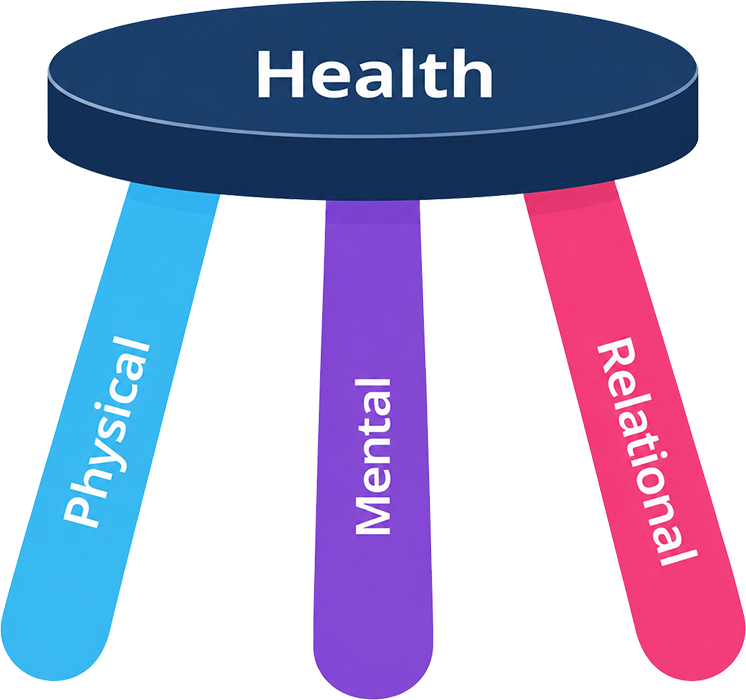
Just as we can strengthen our physical and mental health, we can strengthen our relational health.
How we care for our bodies.
How we care for our mental well-being.
How we connect, communicate, belong, and contribute.
All three matter.
We live in a world that makes it increasingly easy to move through life without needing one another.
Screens have changed how we interact. Many of the everyday places where people gather have disappeared or changed. Convenience can remove some of the small encounters that once brought us into contact with other people.
And yet, our need for connection hasn't disappeared.
Conversation
Friendship
Play
Belonging
Purpose
Community
The answer isn't to reject technology or convenience. It's to become more intentional about creating the conditions human beings still need to connect.
Connection begins within us and moves outward.
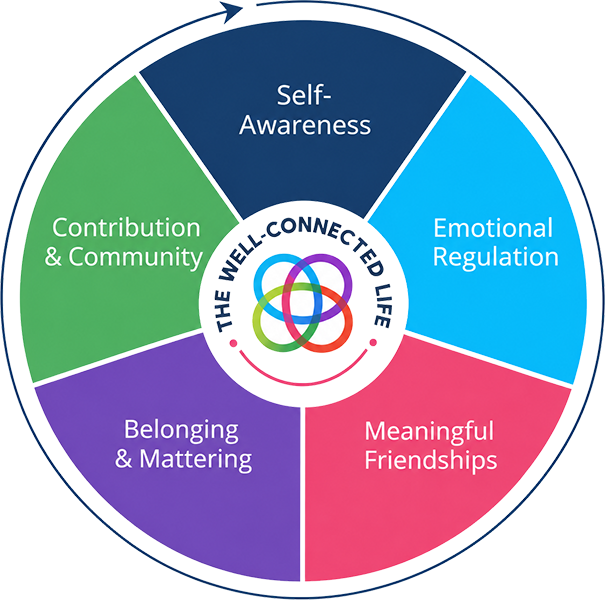
Understanding what we feel, need, value, and bring into our relationships.
Learning to regulate, pause, and respond rather than react.
Building the skills to listen, communicate, set boundaries, navigate conflict, repair, and try again.
Knowing we have a place, that we matter, and helping others feel that they do, too.
Belonging: I have a place here.
Mattering: I am valued here. My presence and contribution make a difference.
Showing up for others and becoming part of something larger than ourselves.
The Five Elements aren't separate ideas. They move outward and strengthen one another.
Know yourself
Regulate yourself
Connect with others
Belong & matter
Contribute to community
We begin by understanding ourselves.
We learn to regulate and communicate.
We practice friendship.
We experience belonging and help create it for others.
And ultimately, we become participants in something larger than ourselves.
A well-connected life begins within us, but it doesn't end there.
“If we want a village, we have to be villagers.”
We are wired for connection.
Research across public health, psychology, neuroscience, and human development points to the importance of relationships and social connection in our health and well-being.
people worldwide experience loneliness.
World Health Organization, 2025
Poor social relationships are associated with a 29% increased risk of heart disease and a 32% increased risk of stroke.
U.S. Surgeon General Advisory
The Harvard Study of Adult Development has found that strong relationships are closely linked with health and happiness across the lifespan.
Harvard Study of Adult Development
Relationships matter to our health.
Belonging matters.
Social connection matters.
The Well-Connected Life takes what we are learning about human connection and translates it into practical skills we can use in our everyday lives.
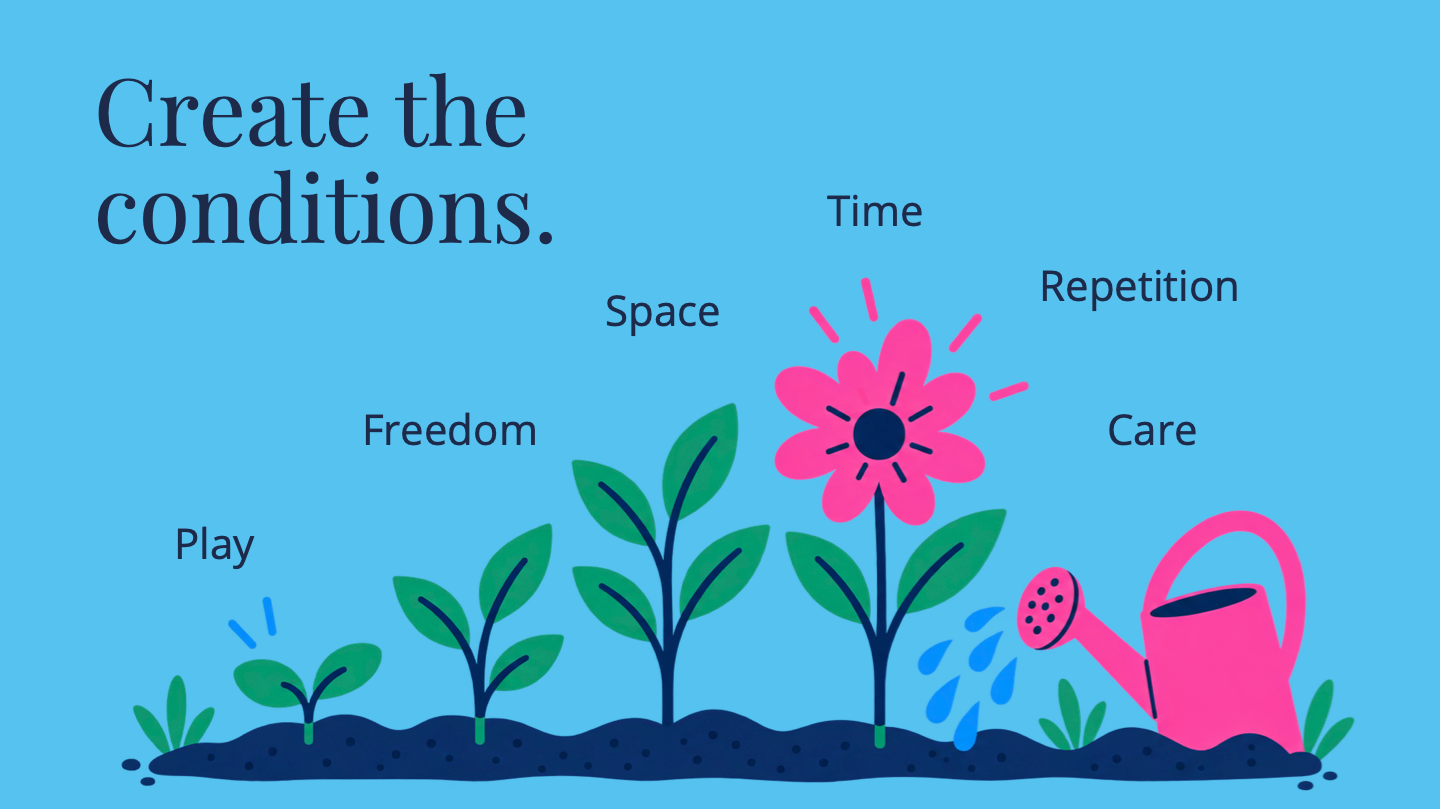
Think of a garden.
We can't pull a flower open to make it bloom faster. And we can't manufacture friendship, belonging, or connection.
But we can create the conditions where connection has a chance to grow.
We can make room for friendship.
We can practice listening and repair.
We can help people feel seen, valued, and included.
We can show up for one another.
We can be villagers.
The Well-Connected Life exists to make relational health something we intentionally teach, practice, and build, not something we simply hope happens.
The Well-Connected Life brings relational health from idea to practice through experiences for schools, families, educators, organizations, and communities.
Explore Programs & Speaking